
The eyes and ears often do not hurt until a problem becomes more pronounced, which makes it easy to underestimate small everyday habits. Vision and hearing are protected not only by supplements, but primarily by routine: appropriate lighting, screen breaks, UV protection, noise control, proper hygiene, and regular checkups. Many habits do not cause harm in a single day, but over months and years they can contribute to eye strain, dry eyes, irritation of the ear canal, hearing loss, or tinnitus [1], [2].
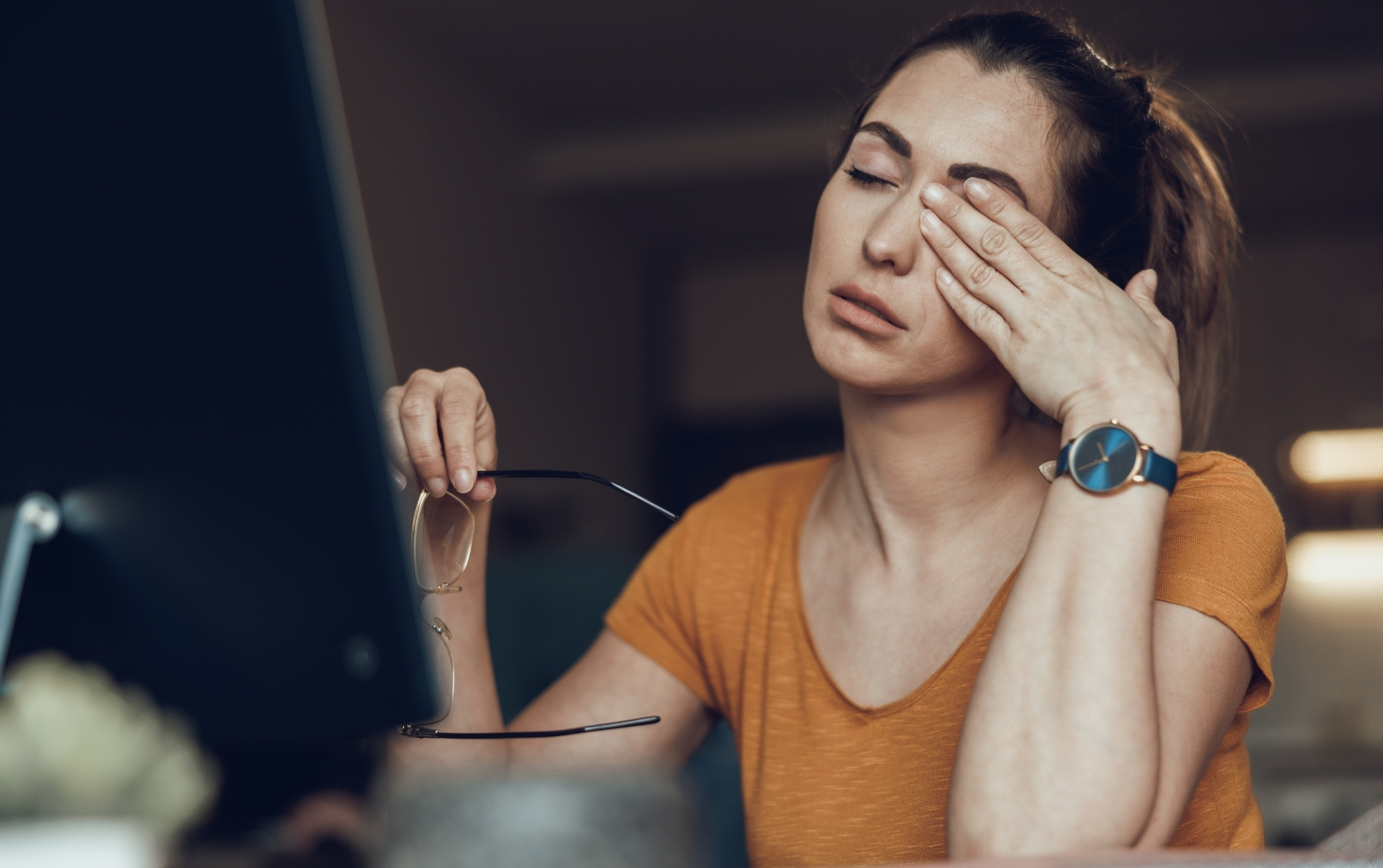
Long hours at a computer, using a phone in bed, and constantly focusing at close range do not necessarily “damage the eyes” permanently, but they can significantly increase symptoms of digital eye strain: burning, dryness, blurred vision, headaches, and a feeling of heaviness in the eyes [1]. The problem is not only the screen itself, but also that people blink less often while looking at a screen and keep their eyes focused at the same distance for long periods [1].
A practical habit is to take regular breaks: after about 20 minutes of screen viewing, shift your gaze into the distance for around 20 seconds. There is no need to measure the exact distance; the important point is to let the eyes break from constant near focus [1]. It can also help to position the screen slightly below eye level, reduce glare, use adequate ambient lighting, and avoid working in complete darkness [1].
Looking at a phone before bed often combines several unfavorable factors: short viewing distance, reduced blinking, poor lighting, and prolonged mental stimulation. It can be especially tiring for the eyes when a bright screen is used in a dark room because the eyes must continuously adjust to a large contrast [1]. This does not mean that every use of a phone in the evening permanently damages vision, but it can worsen eye fatigue, dryness, and the quality of the evening routine [1].
A better habit is to lower screen brightness, switch to a warmer display setting, hold the phone farther from the face, and spend the final 20 to 30 minutes of the day without intensive scrolling. For people who already have dry eyes, wear contact lenses, or spend the entire day working at a screen, this change can make a noticeable difference [1].
Sunglasses are not just a fashion accessory. Excessive exposure to UV radiation can contribute to damage to the surface of the eye, the cornea, and the lens, and UV protection matters even when the weather is not particularly hot [2]. People often wear sunglasses only during summer or at the beach and forget them while driving, walking, spending time in snow or near water, or on cloudy days when UV radiation may still be present [2].
The best choice is sunglasses clearly labeled as providing 100% UVA and UVB protection or UV400 protection. Dark lenses without true UV protection are not a good option because they dilate the pupil without adequately protecting the eye [2]. For children, people with light-colored eyes, those who drive frequently, and people who work outdoors, protection should be part of the daily routine [2].
Rubbing the eyes may seem harmless, but it can increase irritation, introduce contaminants, and worsen allergy or dryness symptoms. If the eyes frequently itch, burn, or become red, it is better to identify the cause than to rub them mechanically every day [1]. With allergies, dry eye, or prolonged screen use, preservative-free artificial tears, eyelid hygiene, and advice from a pharmacist or ophthalmologist may help, but persistent redness or pain should not be masked with “whitening” eye drops [1].
The biggest mistakes with contact lenses include sleeping in lenses not designed for overnight wear, rinsing them with water, extending the recommended wear period, and handling them with unclean hands. These habits increase the risk of eye irritation and infection [3]. Lenses should be cleaned only with an appropriate solution, the case should be replaced regularly, and lenses should not be worn longer than recommended [3].
One of the most common habits that harms hearing is listening to music, podcasts, videos, or games every day at excessive volume. The risk of hearing damage depends on both sound level and duration of exposure: the louder the sound and the longer the exposure, the greater the risk [4], [5]. According to the World Health Organization, sound at around 80 dB may be safe for up to 40 hours per week, while at 90 dB the safe listening time falls to around 4 hours per week [4].
A practical rule is that the volume should not be so high that it prevents you from hearing surrounding sounds or can be clearly heard by people nearby. Lowering the volume, taking listening breaks, using the phone’s volume-limiting settings, and avoiding prolonged listening in noisy environments can all help, because people often increase the volume without realizing it in noisy surroundings [4], [5].
Hearing is not damaged only by industrial workplace noise. Concerts, clubs, sporting events, loud workouts, motorcycles, noisy tools, and entertainment venues can also expose the ears to risky sound levels [5]. Needing to shout in order to hold a conversation at a short distance can be a sign that the environment is loud enough to pose a risk to hearing [5].
Earplugs can be useful in these situations, particularly musicians’ earplugs that reduce sound intensity without completely blocking the listening experience. If ringing in the ears, pressure, or muffled hearing appears after an event, it is a sign that the noise exposure was excessive. Repeated exposure of this kind increases the risk of permanent hearing damage [5].
Earwax is not dirt that needs to be constantly removed. It has a protective role, and in most people the ear canal cleans itself naturally [6]. Cotton swabs can push wax deeper, create an impaction, irritate the ear canal, or injure the eardrum [6], [7].
A safer routine is to clean only the outer part of the ear with a towel or tissue. If there is a feeling of blockage, reduced hearing, pain, ringing, or pressure, it is better to have the ear examined by a healthcare professional, especially in people with previous eardrum problems, ear surgery, frequent infections, or hearing-aid use [6], [7].
Warning signs for the eyes include sudden vision loss, eye pain, severe light sensitivity, eye injury, new flashes of light or a “curtain” over the vision, and redness that does not resolve [2], [3]. Warning signs for the ears include sudden hearing loss, pain, drainage from the ear, dizziness, one-sided ringing, or a persistent feeling of blockage [6], [7]. Sudden changes in vision or hearing should not simply be left to “go away on their own.”
Regular checkups are especially important for people with diabetes, hypertension, autoimmune diseases, a family history of eye disease, occupational noise exposure, or frequent headphone use [2], [5]. The earlier a problem is recognized, the greater the chance of preventing progression or introducing appropriate protection in time [2], [5].
A good eye-and-ear support routine is simple: take screen breaks, wear quality sunglasses, avoid rubbing the eyes, use contact lenses correctly, lower headphone volume, use hearing protection in noisy environments, and do not insert cotton swabs into the ear canal [1], [4], [6]. Small habits repeated every day usually matter more than occasional concern after symptoms have already appeared.
For eye support, preservative-free artificial tears, quality sunglasses with UV protection, protective eyewear for work, eyelid hygiene, and appropriate workplace lighting may be useful [1], [2], [3]. For ear support, useful measures include hearing protection, phone volume limits, and professional assessment when there is a feeling of blockage or reduced hearing [4], [5], [6].
Vision and hearing are usually not damaged by one major mistake, but by a series of small habits repeated for years. Long screen use without breaks, UV exposure without protection, high headphone volume, noise without ear protection, and cleaning the ears with cotton swabs are among the most common habits that can be changed. A good routine does not need to be complicated: protecting the eyes from sunlight and strain, protecting the ears from noise, and responding promptly to pain, sudden vision changes, ringing, or reduced hearing are the basic measures [1], [2], [4], [6].
[1] National Eye Institute (NEI). Keep Your Eyes Healthy. Updated 2025.
https://www.nei.nih.gov/eye-health-information/healthy-vision/how-eyes-work/keep-your-eyes-healthy
[2] National Eye Institute (NEI). Protecting Your Eyes From the Sun's UV Light. 2022.
https://www.nei.nih.gov/research-and-training/research-news/protecting-your-eyes-suns-uv-light
[3] Centers for Disease Control and Prevention (CDC). Contact Lens Wear and Care. Updated 2025.
https://www.cdc.gov/contact-lenses/about/index.html
[4] World Health Organization (WHO). Deafness and Hearing Loss: Safe Listening. Accessed 2026.
https://www.who.int/news-room/questions-and-answers/item/deafness-and-hearing-loss-safe-listening
[5] Centers for Disease Control and Prevention (CDC). Preventing Noise-Induced Hearing Loss. Updated 2026.
https://www.cdc.gov/hearing-loss/prevention/index.html
[6] Mayo Clinic. Earwax Blockage: Symptoms and Causes. 2025.
https://www.mayoclinic.org/diseases-conditions/earwax-blockage/symptoms-causes/syc-20353004
[7] Centers for Disease Control and Prevention (CDC). Preventing Swimmer's Ear. 2025.
https://www.cdc.gov/healthy-swimming/prevention/preventing-swimmers-ear.html